Store-Bought vs. Farm-Raised Beef: Understanding the Difference
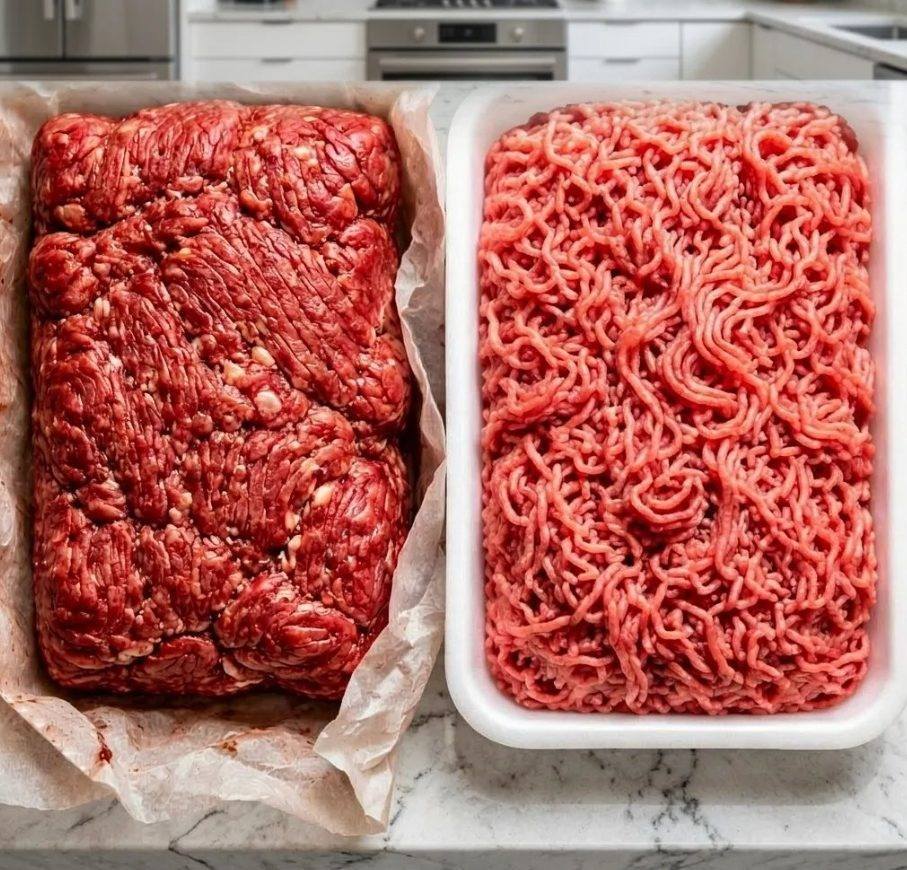
Ground beef is one of the most versatile ingredients in any kitchen. From hearty burgers and tender meatballs to rich sauces and comforting casseroles, it's a staple that finds its way into countless meals. But not all ground beef is the same. The two portions shown side by side tell a story of texture, processing, and quality—differences that can significantly impact your cooking results. Understanding these distinctions helps you choose the right meat for your recipes and make more informed decisions about what lands on your family's table.
A Tale of Two Textures
At first glance, the contrast between the two portions is striking.
The beef on the left is coarsely ground, with visible muscle fibers and irregular chunks of fat scattered throughout. It has a freshly ground, almost rustic appearance—the kind you might get from a local butcher who grinds meat in small batches. This minimal processing preserves the meat's natural structure, which means it retains more moisture and delivers a richer, more robust flavor when cooked.
The beef on the right, by contrast, is finely ground into a smooth, uniform paste. The strands are thin and consistent, tightly packed together. This is typical of industrially processed ground beef, where meat passes through fine grinding plates multiple times. The result is a standardized product that looks neat and packages easily, but the texture is softer and less distinct when cooked.
Texture Matters in the Kitchen
Continued on next page
Continue reading by clicking the ( NEXT 》 ) button below !