How to Know If an Avocado Is Safe to Eat
The Ultimate Guide to Avoiding Waste (and Disappointment)
Avocados are a beloved superfood—creamy, nutritious, and endlessly versatile. But let's be honest: they can be a gamble. You buy one "just in case," only to forget it in the fruit bowl for days. Or worse, you cut it open to find brown streaks, stringy fibers, or a funky smell.
Before you toss it in the trash, pause. Many "imperfect" avocados are still 100% safe—and delicious—to eat.
In this guide, you'll learn how to:
-
Read an avocado like a pro (skin, feel, stem, and flesh clues)
-
Tell the difference between harmless browning and true spoilage
-
Rescue overripe avocados with smart kitchen tricks
-
Store avocados correctly to extend their prime by days
Because with prices soaring, saving one avocado means saving money—and reducing food waste.
Step 1: Judge the Outside (Before You Cut)
The Stem Test: Your #1 Hack
Gently pop off the small stem nub at the top of the avocado.
-
Bright green underneath? → Perfectly ripe and fresh.
-
Brown underneath? → May be overripe—but still safe to eat (check the flesh).
-
Hard to remove or dry? → Likely underripe or past its prime.
This simple test works about 90% of the time—and it beats squeezing and bruising the fruit.
Skin and Firmness Guide
| Color/Feel | What It Means | Can You Eat It? |
|---|---|---|
| Bright green, firm | Underripe | ✅ Yes—just wait 2–5 days |
| Deep green/purple, yields slightly to gentle palm pressure | Perfectly ripe | ✅ Eat today! |
| Very soft, squishy, or dented | Overripe | ✅ Usually yes—great for guacamole or smoothies |
| Black, mushy, or leaking | Likely spoiled | ❌ Toss if foul-smelling or slimy |
Important: Never judge by color alone. Hass avocados turn dark when ripe, but green-skinned varieties (like Fuerte) stay green even when ready to eat.
Step 2: What to Do When You Cut It Open
Even if the outside looks good, the inside may surprise you. Here is how to assess what you see.
Safe and Edible (Do Not Toss!)
-
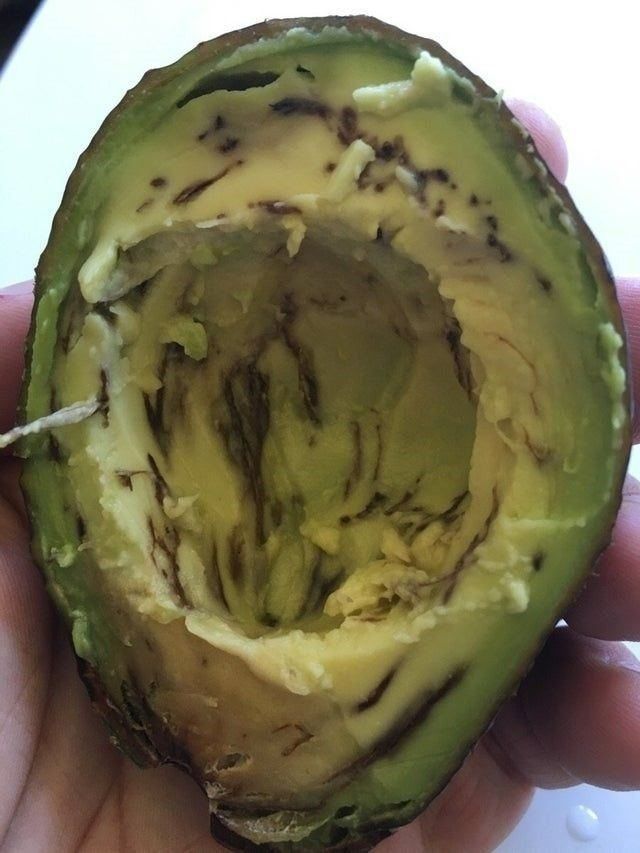
Light brown spots or streaks: Caused by oxidation or minor bruising. Scrape them off or blend them in—they are perfectly fine.
-
Stringy fibers: More common in large or mature fruit. Not harmful, just less creamy. Best for sauces or baking.
-
Slightly soft flesh: Ideal for guacamole, smoothies, or avocado toast.
Spoiled—Throw It Away
-
Dark, slimy, or mushy flesh throughout
-
Sour, rancid, or "chemical" smell (not just earthy)
-
Mold (fuzzy white, green, or black patches)—do not cut around it! Avocado's high moisture allows mold to spread invisibly.
Pro Tip: If it tastes bitter, that indicates rancid fats. Spit it out and compost the rest.
How to Rescue "Not-Perfect" Avocados
Do not waste that expensive fruit! Transform it based on its condition:
-
Underripe? Place it in a paper bag with a banana or apple to speed ripening (1–3 days).
-
Overripe but not spoiled? Make chocolate avocado mousse, smoothies, or vegan brownies—no one will know!
-
Browned top layer? Scrape it off; the green underneath is fine. Drizzle with lemon juice to prevent further browning.
-
Too soft for slicing? Whip it into avocado dressing or creamy pasta sauce.
How to Store Avocados (Correctly!)
Read more on the next page
Continue reading by clicking the ( NEXT 》 ) button below !