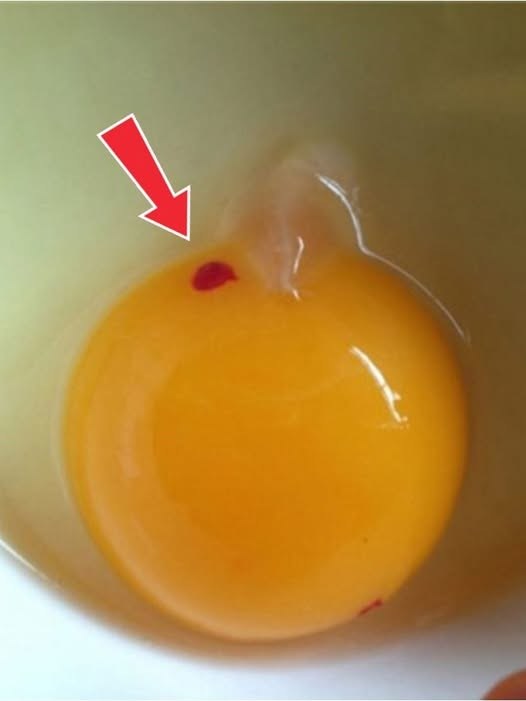
Many home cooks have had this moment: you crack open an egg, and instead of a smooth, golden yolk, you notice a tiny red spot. It can be surprising, especially if you're used to the uniform, clean-looking eggs sold in most grocery stores. Some people throw the egg away immediately, worried it's a sign of spoilage or fertilization, while others simply continue cooking without a second thought.
Because this question comes up so often, it's helpful to understand what these spots really are and whether the egg is still safe to enjoy. With a bit of background, you can reduce unnecessary waste, cook with confidence, and appreciate the natural variations that sometimes occur in one of nature's most perfect foods.
Are Eggs With Red Spots Safe to Eat?
Yes. In the vast majority of cases, an egg with a small red spot is perfectly safe to cook and eat, provided it is fully cooked.
The spot may look concerning, but it does not indicate spoilage, bacteria, or a fertilized embryo. It is simply a natural imperfection. If you find the spot visually unappealing, you can gently lift it out with the tip of a knife or the edge of a spoon before cooking. Many people do this purely for aesthetic reasons, not for safety.
You may also occasionally notice tiny brown or red specks floating in the egg white. These come from harmless bits of tissue that the egg picked up as it traveled through the hen's oviduct. These, too, are safe and do not affect the flavor or quality of the egg.
However, there are rare exceptions. If the egg white itself is tinted pink, green, or distinctly red throughout, this can be a sign of bacterial spoilage. In such cases, the egg should be discarded immediately. When in doubt, trust your senses: if an egg smells off or looks unusual beyond a small spot, it's always best to choose a different one.
How Common Are These Red Spots?
Fewer than one in a hundred eggs contains a noticeable red spot. This is particularly true for eggs sold in grocery stores, where most undergo a rigorous grading process called candling.
During candling, eggs pass over a bright light that allows inspectors to see inside the shell. Eggs with visible spots or imperfections are typically removed from the cartons destined for retail shelves. This sorting process is not about safety, but about appearance. Most shoppers prefer eggs that look clean and consistent, so stores simply avoid stocking eggs with visible spots.
Farm-fresh eggs are a different story. Because they are usually not graded or candled, these natural markings are more likely to appear. Brown-shelled eggs may also show spots more often, as the darker shell makes the spots harder to detect during inspection.
Why Do These Spots Form?
see continuation on the next page
Continue reading by clicking the ( NEXT 》 ) button below !